

Ejector pump system
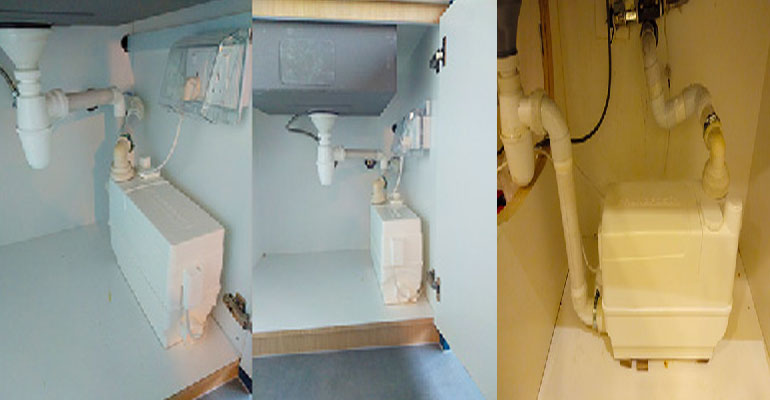
An ejector pump system pumps toilet waste and waste water collected in an ejector tank, installed in the building's ejector pit, out to the manhole inspection chamber (IC) outside the building. It exists for one reason: the fixtures it serves sit below the level of the public sewer, so the waste cannot flow away by gravity and has to be lifted.
Waves Fluid Engineering Pte Ltd designs, supplies, installs, maintains, repairs and replaces ejector pumps, their parts and accessories across Singapore, and handles the PE submission to PUB for new systems. We work on both standard and customised configurations, and we service existing systems whichever contractor originally installed them.
What is an ejector pump?
It is a sewage pump that lifts waste water from a sealed tank below ground up to the sewer line. Float switches detect the rising level in the ejector tank and start the pumps automatically, so a basement toilet, a below-grade pantry or a low-level facility can discharge into the public sewer as normal.
Also known as: sewage ejector pump, sewage lift station, waste water ejector, toilet waste pump and below-sewer sewage pump. All describe the same duty of lifting sewage up to the sewer line.
How an ejector pump system works
The system runs unattended, in three steps:
1
Waste collects in the tank
Discharge from toilets and other fixtures below sewer level gravitates into the sealed ejector tank inside the ejector pit.
2
Float switches start the pumps
Normally open float switches sense the rising level and signal the control panel, which starts the duty ejector pump.
3
Discharge to the manhole IC
The pump lifts the waste through check and gate valves to the manhole inspection chamber outside the building, and into the sewer.
Two types of ejector pump system
Two configurations are commonly used in Singapore. We select between them on the design requirement and site conditions.
Standard
Submersible ejector pumps in the tank
Two ejector pumps fitted inside the ejector tank and connected to the public manhole IC. This is the usual arrangement for small-sized residential buildings, where the duty is modest and space is limited.
Customised
Dry-mounted ejector pumps
Dry ejector pumps mounted with the ejector tank and connected to the public manhole IC. Used for all other building types. Keeping the pumps out of the waste makes servicing cleaner and access easier.
Why there is also a sump pump in the ejector pit
This catches many building teams out, so it is worth stating plainly: an ejector pump system always comes with a sump pump installed in the ejector pit. Its job is different from the ejector pumps. It clears the used water that collects in the pit itself, typically from washing down the ejector tank, the pit and the other features inside it, and sends that water to the manhole IC as well.
So one pit holds two different pumping duties: ejector pumps handling sewage from inside the sealed tank, and a sump pump handling the wash-down water around it. When someone reports "the pump in the ejector pit is faulty", the first job is establishing which of the two they mean, because they are rated for completely different duties.
Still not sure which pump you have? Read our guide on sump pump vs ejector pump for a practical way to tell them apart on site.
PUB requirements for ejector and sewage pumping
An ejector installation is a sewerage pumping system, so it is designed under PUB's Code of Practice on Sewerage and Sanitary Works rather than the drainage code. The requirements below shape the specification, and your PE confirms what applies to your project at submission.
64mm
Minimum free passage
A pump receiving discharge from toilets and food establishments must have a minimum free passage diameter of 64mm, and the discharge pipe must be larger than that free passage.
Duty + standby
Pump arrangement
The pumping system must be provided with duty and standby pumps, together with reflux and isolating valves, so the system keeps working while one pump is serviced.
3x inflow
Not oversized
The pump must not be oversized: its discharge rate should not exceed three times the inflow rate, which keeps the system from short cycling.
SS CP 5
Electrical installation
Electrical installations for the system must comply with the applicable Singapore Standard code of practice for electrical installations.
PE submission included: new ejector pump systems require submission to PUB by a Professional Engineer. We handle this as part of the scope, so you are not left coordinating the submission separately from the installation.
Components of an ejector pump system
A typical system is built from the following parts. Sizes and quantities are matched to your pit, tank and inflow on quotation.
| Component | Details |
|---|---|
| Ejector pumps | Two pumps installed to lift the toilet waste collected in the ejector tank, arranged duty and standby |
| Ejector tank | Sealed tank inside the ejector pit that receives the waste before it is pumped out |
| Control panel | Controls the operation and alternation of the ejector pumps, with overload protection and fault alarm |
| LED indicators | Show the operation of each ejector pump and help verify the condition of the system components at a glance |
| Float switches | Two to four normally open float switches that start the ejector pumps based on the waste water level |
| Sump pump | Separate pump in the ejector pit that clears wash-down water from the pit to the manhole IC |
| Check valves | Stop discharged waste from flowing back into the tank when the pump stops |
| Gate valves | Isolate each pump so one can be serviced while the other keeps the tank clear |
Where ejector pump systems are installed
- Basement toilets and below-grade washrooms
- Commercial buildings, offices and malls
- Industrial buildings and factories
- Hospitals, schools and institutions
- Small-sized residential buildings and landed properties
- Any premises with fixtures below the public sewer level
Brands we carry
We keep most of these in our warehouse to avoid delays in delivery and installation, and we select the pump on the solids it must pass, the head required and whether it is a submersible or dry-mounted arrangement.
Tsurumi
Heavy-duty sewage
Grundfos
Sewage & waste water
Wilo
Submersible range
Lowara
Compact submersible
Calpeda
General duty
Goulds & Vossche
Also available
Recent installations
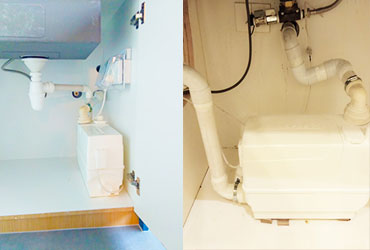
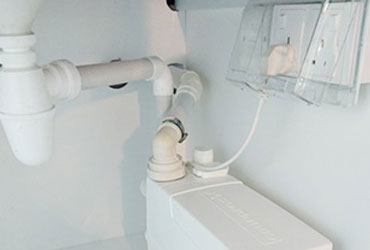
Common ejector pump problems we fix
Ejector pumps fail in fairly predictable ways, and almost all of them announce themselves before the tank overflows.
Blockage from wipes and rags
The most common fault by far. Wet wipes, cloths and sanitary items wrap around the impeller, choke the free passage and trip the pump.
Strong odour from the pit
Usually a failed seal on the tank or pit cover, a blocked vent, or waste sitting in the tank because the pumps are not clearing it properly.
Alarm sounding or level high
Points to a pump that is not starting, a stuck float switch, or an inflow that has outgrown what the system was originally sized for.
Only one pump ever runs
Failed alternation in the control panel, so the duty pump wears out while the standby sits unused and eventually seizes.
Pump runs but level stays high
A jammed check valve, a partly blocked discharge line, or a worn impeller no longer generating the head needed to reach the IC.
Repeated tripping
Worn bearings, a failed mechanical seal letting waste into the motor, or an electrical fault in the panel drawing excess current.
Our services for ejector pump systems
New system
For a new ejector pump system
- Design the pump system from your drawing, or collect the consultant's drawing with the pump requirements.
- Suggest a few suitable brands for your selection.
- Quote based on the brand you choose, including PE submission to PUB.
- Install the system, including testing and commissioning.
Repair
For a faulty ejector pump system
- Visit your premises at a time convenient to you.
- Identify the faulty parts in the existing system.
- Give an obligation-free quotation for the repair or replacement works.
- On your approval, carry out the works with utmost quality.
Servicing, monitoring and overflow protection
An ejector system runs every single day, unlike a sump pump that waits for rain, so wear is continuous and servicing matters. Scheduled pump maintenance works typically cover clearing the tank and pit, checking the impellers and free passage for blockage, testing the float switches and pump alternation, inspecting check and gate valves, and confirming the panel alarms operate.
Because an overflowing ejector or holding tank can mean a fine from PUB and not just a mess, many buildings add a holding tank SMS alert system. It monitors the level in the ejector or holding tank and sends an SMS to nominated local numbers when the level reaches high, so the team can act or arrange the waste water removal contractor before the tank overflows.
Our certifications
BCA ME11
Mechanical Engineering, L1
BCA GB1
General Builder Class 1
bizSAFE Star
Workplace Safety & Health
ISO 9001:2015
Quality Management System
Warranty
One-year warranty on parts we install
All spare parts we use are genuine parts supplied by globally recognised manufacturers. We provide a one-year warranty against products changed and/or installed by Waves Fluid Engineering Pte Ltd at your premises (subject to terms and conditions).
Related pump systems & services
All water pump systems
Sump pump system
Pantry pump system
Transfer pump system
Holding tank SMS alert
Pump maintenance works
Frequently asked questions
What is an ejector pump system?
It is a sewage pumping system that lifts toilet waste and waste water from an ejector tank, installed in an ejector pit below ground, up to the manhole inspection chamber and into the public sewer. It is needed wherever fixtures sit below the sewer level, so the waste cannot drain away by gravity.
What is an ejector pit and an ejector tank?
The ejector pit is the below-ground chamber that houses the installation. Inside it sits the sealed ejector tank, which receives the waste water from the fixtures before the ejector pumps lift it out. The pit also contains a separate sump pump to clear wash-down water collected around the tank.
What is the difference between an ejector pump and a sump pump?
An ejector pump handles sewage and toilet waste and discharges to the manhole IC and sewer. A sump pump clears collected water such as rainwater and seepage, usually from a basement or car park, and follows the surface water drainage route. The two are often confused because an ejector system contains both. Our guide on sump pump vs ejector pump explains how to tell them apart.
Why does the ejector pit have a sump pump as well?
The ejector pumps only handle what is inside the sealed ejector tank. Water collects in the pit itself from washing down the tank, the pit and the other features in it, and that water needs its own pump. That sump pump also discharges to the manhole IC.
What size pump does an ejector system need?
Under PUB's Code of Practice on Sewerage and Sanitary Works, a pump receiving discharge from toilets and food establishments must have a minimum free passage diameter of 64mm, with a discharge pipe larger than that free passage. The pump must also not be oversized: the discharge rate should not exceed three times the inflow rate. Your PE confirms the exact selection for your project.
Do I need duty and standby ejector pumps?
Yes. The code requires the pumping system to be provided with duty and standby pumps, along with reflux and isolating valves. That is why a standard ejector installation has two pumps: one runs while the other stands by, so the system keeps operating during servicing or a breakdown.
Do you handle the PUB submission?
Yes. New ejector pump systems require submission to PUB by a Professional Engineer, and we handle this as part of the installation scope so the submission and the works are coordinated together rather than separately.
Why does my ejector pump keep blocking?
Wet wipes, cloths and sanitary items are the usual cause. They wrap around the impeller and choke the free passage, and no amount of pump capacity solves it. Alongside clearing and servicing, the practical fix is signage and user discipline in the washrooms served by the system, plus scheduled servicing to catch build-up early.
Why is there a bad smell coming from the ejector pit?
Usually a failed seal on the tank or pit cover, a blocked or inadequate vent, or waste sitting in the tank because the pumps are not clearing it fully. It is worth investigating promptly, because odour is often the first visible symptom of a pump that has stopped performing.
How often should an ejector pump system be serviced?
More often than most other pumps, because it runs every day. We recommend scheduled servicing, typically quarterly, covering tank and pit cleaning, impeller and free passage checks, float switch testing, pump alternation, valve inspection and panel alarm testing. Maintenance contracts are available.
Can I get an alert before the tank overflows?
Yes. A holding tank SMS alert system monitors the level in the ejector or holding tank and sends an SMS to nominated local numbers when it reaches high level, so you can act or call the waste water removal contractor before the tank overflows and attracts a PUB fine.
Do you repair ejector pumps installed by another company?
Yes. We visit at your convenience, identify the faulty parts, provide an obligation-free quotation, and carry out the repair or replacement on your approval, whatever the brand and whoever installed it originally.
Need an ejector pump installed, repaired or serviced?
Call or WhatsApp +65 9487 0446 or email sales@wavesfluid.com.sg for a site visit and quotation.